Friday, January 23, 2015

Dancing With Wolves part 2

Dancing With Wolves uses pathos to connect the viewer to the struggles and hardship the Sioux went thought when settlers came to their land. There is a scene where Lt.Dunbar dance around a fire when he returns from his time with the tribe. Before this was seen as savage but this film made it a beautiful scene that showed Dunbar connecting with the tribe and also spiritually to nature. Another use of pathos in the movie is Two Socks; the wolves. When he is killed it shows the senseless killing and pain. Killing another for no other reason than not understanding each other. There was no respect, pain and killing was done for sport. The movie also uses pathos to get the viewer to really think about the to very different cultures and how they clash. In the scene where the Sioux found the buffalo the settlers had killed just for there fur and tongues, it shows the differences in views the two cultures have. The natives respect everything they kill and never waste any part of the animal. The settlers on the other hand just kill them so they can make a profit and don't worry about the rest of the animal that could help preserve the Sioux way of life. The scene is so sad and heartbreaking that it makes one think about how the two sides are so different and the violence that came from that.


Dancing With Wolves breaks a lot of stereotypes surrounding native nations but still misrepresents the tribe throughout the movie. The movie makes it seem that Lt.Dunbar teaches the Sioux how to use guns for the first time. In reality the Sioux had been trading for guns for a while before this movie takes place. The tribe were already good shooters and don't need someone to teach them how to use a gun. Another misconception is the fight between the Sioux and Pawnee. The movie shows the Sioux as weaker and afraid of the Pawnee. Battles between these two tribes had been going on for a along time and they were pretty equal in terms of warriors. The Sioux were not afraid of them, they had won many battles prior to when the movie takes place. Other thing that was looked over until the end of the movie was the fact that white settlers were not the first people the Sioux had to fight for their land against. The majority of the movie the Sioux are depicted as this being their first encounter with people other than the neighboring tribes. The Sioux had to battler the Spanish, Mexicans, and Texans all before white settlers came to their land.  This was the first film that showed natives as something other than savage but it still has its imperfections and doesn't depicted them completely accurate. 


Tuesday, January 20, 2015

Dancing with Wolves

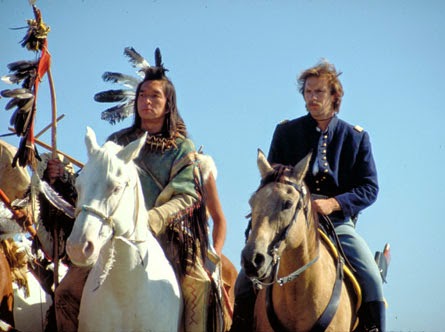
Dancing With Wolves changed the way American culture viewed native nations. It not only brought to light that there are to sides to every battle but also that  there are so many stereotypes around the native cultures.  One example of the two different sides is the the different outfits there wear to battle. Lt.Dunbar dresses in this soldier uniform with all the metals and swards where Wind In His Hair wears the animal skin. Neither one is wrong it is just a difference in culture. Both view themselves as wearing the right stuff and the other as savage. The difference is also noticeable in the hunting of buffalo. The Sioux nation uses all the the animal and leaves no waste. They have ceremonies and rely on these animals. White settlers would just hunt the buffalo for their skin and tongue. Those were the profitable parts of the animal and what the settlers relied one. Again neither side is wrong, its just a difference in views and culture. The settlers and the Sioux also had a difference in the way they cleaned and took care of the land. Soldiers left trash behind and typically didn't clean up after themselves. Many native nations on the other hand, left no trace of any trash. The two sides do many things in difference ways and both view themselves as superior and doing everything the right way. There is not right or wrong way, it is just a difference between the two cultures.


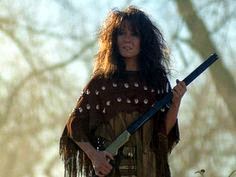
 There was many stereotypes shown in Dancing With Wolves. When Lt.Dunbar first met Standing With A Fist, her hair was a mess and she looked very savage. In reality she would always have her hair gelled and look more put together. The main stereotype that was broken by this film was the savage view of natives. They were always depicted as not civilized and less superior then white settlers.  This movie was the first to show another side to that, one were native nations were respected and seen as equals not inferior. The actors that played the members of the Sioux nation actually learned their language. In past films, actors would just talk backwards or nonsense. This made the natives look dumb and secondary to the settler. Many native nations were excited about this movie because for the first time they were respected in film and it gave a pretty accurate description of the tribe.


Monday, January 12, 2015

Native Nations

UMATILLA

The Umatilla tribe lived along the Columbia river plateau in northeastern Oregon and southwestern Washington. They largely depended on the salmon that they found in the river. They not only used it for food and trade, but they also used the dried fish as fuel. "Dried salmon served the same purpose corn and buffalo product did throughout the North American plains" (National Geographic). They were often raided by neighbor Paiute, which is why they were very hesitant when Lewis and Clark approached them as part of their expedition. Clark had to force his way into one of the lodges and pursed the Umatilla tribe with numerous gifts. Lewis and Clark included the Umatilla as part of the Walla Walla tribe that lived near by, even thought the had separate language dialect. It look many years till they were seem as independent from the other tribe.

                                                   Actress                                  chief Tin Tin


MOJAVE

The Mojave tribe lived along the Colorado river in California and Arizona. They had an advanced agricultural culture. They grew corn and beans along with hunting and fishing. The Mojave culture also stood out because of the family unit system the tribes was based one. For men within the tribe, personal value depended on the courage you showed in battle. Another thing that set the Mojave tribe apart from other native nations is there belief in one supreme entity. Today there are only about 1500 members of the Mojave tribe living on  reservation in Arizona. Majority of them still speak the native language Yuman.

Mojave chairman                         Olivia Oatman: taken by Mojave tribe after her family was killed

LAKOTA

The Lakota is part of the Sioux nation and consists of 7 tribes. The Lakota were originally settled in Minnesota until thy started using horses is the 1700's. They moved west to Wisconsin, iowa, and the Dakotas. The men and women had very strick roles within the tribe. Men were suppose to provide and protect the family, while the women stay home and take are of the kids. While they lived in Minnesota they mainly lived off for small huntinf, such as deer and the wild rice that grw in the area. After moving west, they lived off hunting buffalo.The Lakota had many battles and wars with rival tribes and the U.S during the 1800's. The most famous battle is the Battle of Little Big horn where chef Sitting Bull and his worriers defeated General George Custer and 300 of his troops.  Today there are over 70'000 Lakota member compaired to the 20'000 members in the mid- 18th century. They live on a reservation in South Dakota called Pine Ridge. Around 1/3rd of the population still speak the native language.

Chief Sitting Bull

JEMEZ

The Jamez tribe is the last remaining Towa speaking tribe. They live in the pueblo village of Walatowa in New Mexico. There is around 3400 members. They lived off of farming, but they were gatherers and hunters as well. In the 1600's, Spanish settlers invaded the tribe and tried to forcefully convert the Jemez to Christianity. Many people did accept the new religion and way of life to a certain point but there was also a lot of rebelling against the Spaniards. Wen the Spaniards started publicly humiliating and hanging Jemez religious leaders, a huge uprising occurred and the Spanish settlers were forced out of New Mexico. 12 years later, the Spaniards reconquered the Jemez in what was known as the Bloodless Reconquest.

Chiefs daughter                artist

ALABAMA

The Alabama tribe originally settled in Alabama. That is how they got their name. From the push of white settlers, they moved to Mississippi and then to Texas. Along with farming corn, beans, and other crops, the Alabama tribe hunted deer and bear. They used bow and arrows as their main weapon to get food, but they also used advanced techniques to make hunting easier. They would burn away the tall grass and gather acorns and other nuts to eat, then wait for new shirt grass to grow to attract the deer. The Alabama tribe also had many religious ceremonies. Fire was always a big part of these ceremonies and their beliefs. They kept fires burning in very home and temple at all times.   Today 550 members live on a reservation in in Texas. In 1987, they became a Federal recognized tribe called the Alabama-Coushatta Tribe of Texas and were given 4500 acres of land for the reservation. The symbol of the tribe is very complex with many meanings. In total the symbol represents "the creator" or the egg, seed, or cell. There are 4 points that represents the 4 elements and seasons. The 7 feathers on each wing equal the 7 sacred ceremonial pieces and when multiplied together equal 49, which is when a men or women is recognized has surviving all tests and being spiritually powerful. They built temples of dirt that resemble pyramids and commonly the spiritual buildings and chef's houses were built on top.


                                                       council chairman                   chief Oscola

"Alabama - Coushattas, Texas Indians." Alabama - Coushattas, Texas Indians. N.p., n.d. Web. 11 Jan. 2015.

"Marlon Magdalena Art & Music." A Brief History of Jemez Pueblo. N.p., n.d. Web. 11 Jan. 2015.

"National Geographic: Lewis & Clark—Tribes—Umatilla Indians." National Geographic: Lewis & Clark—Tribes—Umatilla Indians. N.p., n.d. Web. 11 Jan. 2015.

"Summary of Native American Tribes - J-K." Summary of Native American Tribes - J-K. N.p., n.d. Web. 11 Jan. 2015.


Monday, November 17, 2014

Act 3

Act three of The Laramie Project describes the effect the case had on the people of Laramie. It impacted so many people. "And when I got there, there were thousands of people in just black, with umbrellas everywhere.And there were two churches-one for immediate family, uh, invited guest, people of that nature, and then one church for everyone else who wanted to be there. And then, still, hundreds of people outside that couldn't fit int either of the churches. And there was a big park by the church, and that's where these people were. And this park was full" ( Moises Kaufman 75). The vest number of people that came to Matt's funeral showed how many people were moved by his story and wanted to be there to support him and his family as they said goodbye. This case didn't effect everyone in a positive way." But this murder is different, because the fags are bringing us out here trying to make Matthew Shepard into a poster boy for the gay lifestyle. And we're going to answer it" (Kaufman 78). this case made people push back against the general public desire for change and acceptance. There was also a push back against the protesters."After seeing Fred Phelps protesting at Matthews funeral and found out that he was coming to Laramie for the trial of Russell Henderson, I decided that someone needed to stand toe-to-toe with this guy and show the difference" (Kaufman 79). As people protested it encouraged others to take a stand and fight for a change. No matter what way people were effected, everyone was impacted by this murder.


This crime not only made people think about gay rights but also about the death penalty. This created controversy for the people of Laramie. "How can I protest, if the Shepard's want McKinney dead? I just cant interfere in that. But on a personal level, I knew Aaron in grade school. We never called him Aaron, he was called A.J" (Kaufman 88). People didn't just have to think about f the crime was worth death but also if they would give the death penalty to an old childhood friend. Everyone of Laramie who grow up with Aaron was personally involved the case. "Parts of me wants McKinney to get it. But I'm not very proud of that. I was on and off, off and on. I cant say what I would do... I'm too personally involved"(Kaufman 88). Everyon0e had this connection to Aaron and Russell so no matter their view on the death penalty it was hard to decide what is right and wrong. Even if people didn't want the death penalty for Aaron, no one wanted him free. "I don't know about the death penalty. But I don't ever want to see them walk out of Rawlins Penitentiary. I'll pay my nickel, or whatever, my little percentage of tax, nickel a day to make sure that his ass stays in there and never sees society again and definitely never comes into my bar again"(Kaufman 88). Weather or not people wanted to see Aaron dead or not, no one wanted to see him free. This case caused so much controversy within the people of Laramie.

Nikki Brown, Gabe Adams analysis blog

"if you don't take care of your land, then you ruin it and lose your living" (Engen 4)


"the difference is that in Wyoming there are fewer places to blend in if you're anything other than prairie stock" (Kaufman 47)

"how can i protest, if the shepherds wants McKinney dead? I just can't interfere with that. But on a personal level, I new Aaron in grade school " (Ula 89)

Sunday, November 9, 2014

Laramie Project act 2

The second act of The Laramie Project focus's on the mentality towards gay people in Laramie. Sergeant Hing describes his opinion on the view of gay people in Laramie."We have one of the most vocal populations of gay people in the state....And it's pretty much: Live and let live" (Moises Kaufman 45). It is a sad fact that people use this as a good mentality to have. It shouldn't just be live and let live, the community should be accepting of everyone no matter sexual orienting. Jeffrey Lockwood describes hes wish for the men who did this weren't from Laramie. "We don't grow children like that here. well, its pretty clear that we do grow children like that here..."(Kaufman 46). People are oblivious to the fact that Aaron and Russell grow up in Laramie and therefor where influenced by the communities view on gay people. The governor talks about pushing hate crime legislation. "I would like to urge the people of Wyoming against overreacting in a way that gives one group "special rights over others"" (Kaufman 48). He is not thinking about protecting gay people of Wyoming and more on disregard them. People may say they don't have a problem with people who have a different sexual orientations but it isn't true unless they are actually accepting and don't just believe people should live and let live.

 Media defined this case. Aaron's dad describes the effects he thinks the media had on his sons conviction. "Had this been a heterosexual these two boys decided to take out and rob, this never would have made the national news. Now my son is guilty before he's even had a trial"(Kaufman 49). The media made up its mind about the reasoning for the murder before the investigation was even finished and no one questioned it. Reporters came from all over the country to cover this case. "It was huge. Yeah. It was herds and -and were talking hundreds of reporters which makes a huge dent in this tows population. There's reporters everywhere, news trucks everywhere on campus, everywhere in the town. And were not used to that type of attention to begin with, were not used to that type of exposure" (Kaufman 47).  So many people came to Laramie and broad casted not only the case but everyone in the town. The medias coverage of the crime made the nation think but more specifically the people of Laramie think. "Look, I do think that, um, the media actually made people accountable. Because they made people think. Because people were sitting in their homes, like watching TV and listening to CNN and watching Dan Rather and going, "Jesus Christ, well that's not how it is here." Well how is it here?"(Kaufman 49). The exposure gay rights got from this horrible murder made everyone consider how accepting they and their community was. It brought out change and recognition to the gay community.

Saturday, November 1, 2014

Laramie Project- defined and ignorance

Events can permanently define a place or person. The Laramie Project is a book containing interview from the people of Laramie about the Matthew Shepard case. "Laramie is a town defined by an accident, a crime." (Kaufman, 9) When people think of Laramie Wyoming, they think of Mathew. The Town of Laramie will forever be seen as the place this horrific hate crime took place. The town will never be seem for what it used to be or what it is not. "Now, when the incident happened with that boy, a lot of press people came here. And one time some of them fallowed me out to the crime scene. And uh, well, it was a beautiful day, absolutely gorgeous day, real clear and crisp and the sky was that blue that-it's just gorgeous. And the mountains in the background and a little snow on em'"(8) None that came to Laramie noticed the beauty of it, all they saw was the crime scene. The incident marked the town and that is all anyone can think of now when they heard Laramie. People bi pass everything else that Laramie is and only focus on the bad things, the things associated with the hate crime. "And they were just-nothing but the story. I didn't feel judged, I felt that they were stupid. they're, they're missing the point- they're just missing the whole point." (9) So many people came to Laramie after hearing about Mathew but none of them noticed anything other than the case. Even today, 16 years after his death, Laramie is defined as the place Matthew Shepard was beaten and killed.

Ignorance is a lack of knowledge and understanding. Many people believe that along with ignorance,
one finds bliss. This is the case for the people of Laramie in 1998 surrounding Mathew Shepard's murder. "they were happy. They were glad the sun was shining" (Kaufman 6).  Rebecca Hilliker describes the people of Laramie as being happy due to the simplest thing, they don't get dragged down by the whats going on elsewhere in the world. When you grow up in a small town around the same people your whole life, everyone tends to have the same opinions and attitudes towards stuff. "I would have told you Laramie is a beautiful town, secluded enough that you can have your own identity" (9) This isn't true, the seclusion makes it so everyone is influenced by the same thing and isn't exposed to different cultures and opinions. Laramie is a unique place. "I
thought it was strange that the sign said: WYOMING-LIKE NO PLACE ON EARTH instead of WYOMING-LIKE NO PLACE ELSE ON EARTH"(13) This shows how Laramie is secluded from the rest of the world, it cannot even be compared to it. Without different influences, people live life with an ignorance. This ignorance might be blissful but one misses out on so much knowledge and  grasp on the world.